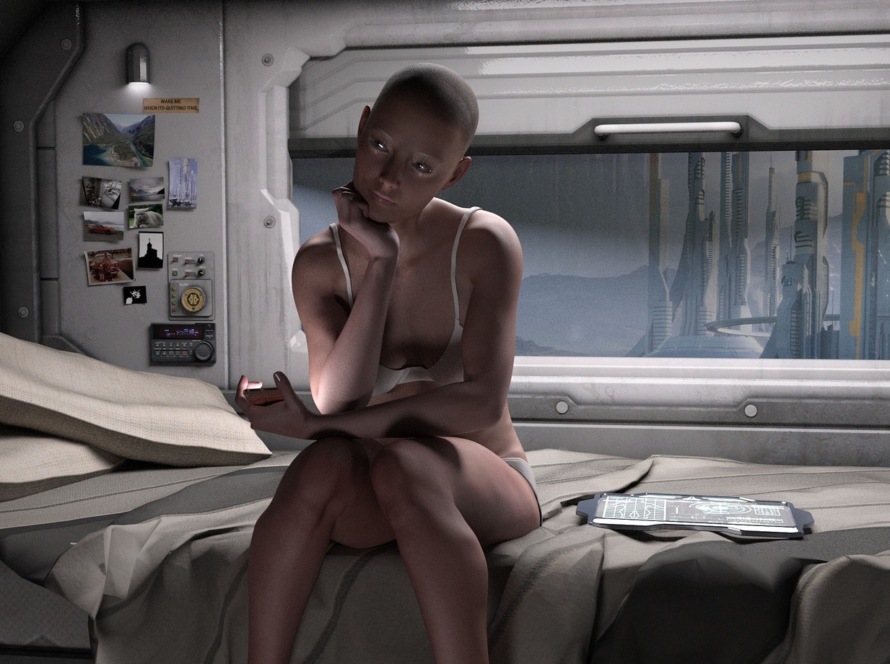
Imagine a world with no hunger, no predators, no disease, and no real danger. Food appears on demand. Water is unlimited. Shelter is guaranteed. There is nothing to fight over — and nothing you need to survive.
It sounds like paradise.
In the 1960s, an American researcher decided to test what would actually happen in such a world. The result became known as Universe 25 — one of the strangest and most disturbing behavioral experiments ever conducted.
A Perfect World, Built for Mice
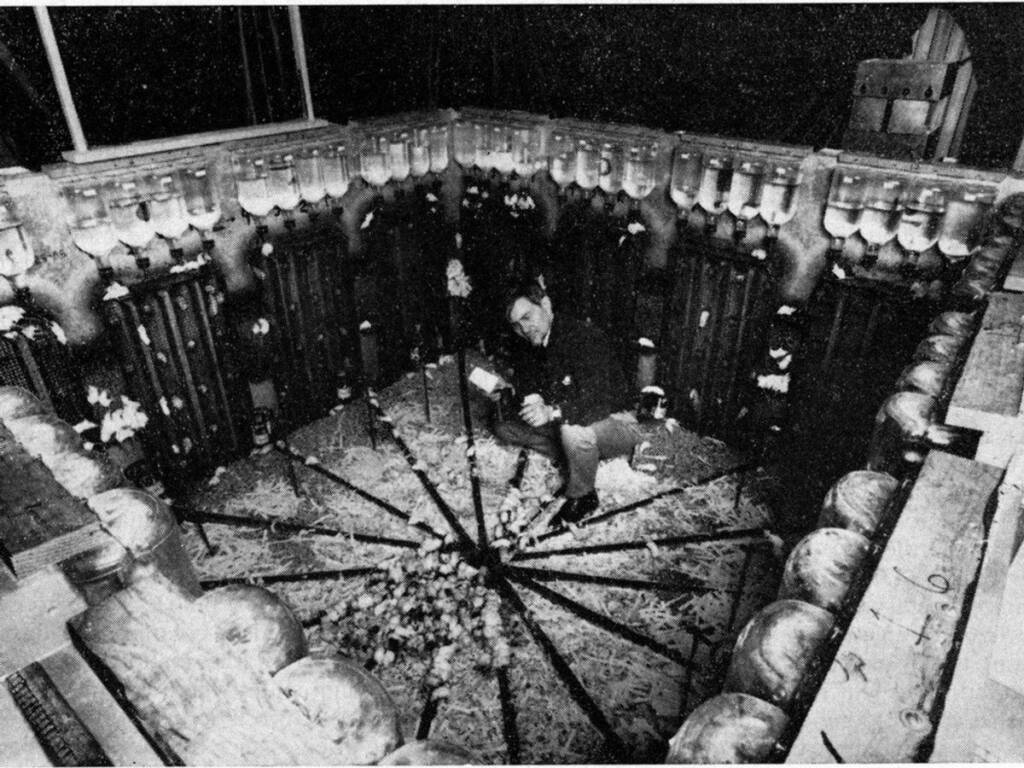
The experiment was created by John Calhoun, a behavioral scientist fascinated by population dynamics.
Universe 25 was a carefully designed enclosure for mice:
- unlimited food and water
- constant temperature
- no predators
- plenty of nesting material
In theory, nothing could go wrong. Eight mice were introduced into this artificial “utopia”. At first, everything went exactly as expected.
When Growth Stops Being Healthy
For nearly a year, the population exploded. The mice behaved normally — eating, grooming, reproducing, building nests. Social structures formed naturally. But then something subtle changed. As the enclosure became crowded, space — not food — became the limiting factor.
Mice began to:
- withdraw from social interaction
- cluster unnaturally
- show increasing aggression
- abandon parental behavior
Reproduction slowed, even though nothing external had changed. The system wasn’t running out of resources — it was running out of meaningful roles.
The Behavioral Sink
Calhoun described the collapse as a behavioral sink — a state where social behavior disintegrates despite physical needs being met. Some males stopped competing, mating, or defending territory. They spent their time eating and obsessively grooming themselves. Females became increasingly stressed, aggressive, or indifferent. Many abandoned their offspring. Young mice grew up without stable social models and failed to integrate at all. Eventually, births dropped to zero. Even when space later became available again, the population never recovered.
Abundance Was the Problem
Universe 25 didn’t fail because of scarcity.
It failed because:
- effort no longer mattered
- social hierarchy collapsed
- purpose vanished
- behavior lost consequences
Survival no longer required doing anything. And without behavioral pressure, complex social systems simply unraveled.
Was Calhoun Predicting Human Extinction?
This is where the experiment becomes controversial. Calhoun believed Universe 25 reflected something deeper — that advanced societies risk collapsing not from hardship, but from excessive comfort. Critics strongly disagreed. Mice are not humans. Human societies adapt culturally, not just biologically. We create meaning artificially — through values, goals, stories.
And yet…
The experiment continues to resurface in discussions about:
- declining birth rates
- social isolation
- loss of purpose in wealthy societies
- overstimulation without fulfillment
Universe 25 doesn’t predict our future. But it does ask an uncomfortable question.
A Warning, Not a Prophecy
Universe 25 doesn’t say “we will all die.” It says something quieter — and far more unsettling. A society optimized only for comfort may slowly forget how to function at all.
This same question — what happens when survival no longer demands effort — is one I explore from a different angle in my book “Biogenetic Miracle“, where biology, meaning, and progress begin to drift apart.
Challenge, friction, and responsibility aren’t bugs of civilization — they are structural supports. Remove them entirely, and the system may collapse under its own ease. The mice didn’t die because life was hard. They died because life stopped asking anything of them.
To not miss out on fresh articles, useful tips, and exclusive materials, I suggest subscribing to our newsletter:
Thank you for your attention, Lumin Hopper