School Was Designed for a World That No Longer Exists
Walk into a typical classroom today. Rows of desks. A bell. Thirty students born in the same year. One adult at the front explaining something chosen years ago by a distant ministry.
This system worked — when the world changed slowly.
But now?
By the time today’s first-graders graduate, artificial intelligence may write software better than humans, translate languages instantly, and generate art on demand. Teaching a child a specific programming language for a lifelong career is like teaching them how to operate a steam engine in the age of electric cars.
So the uncomfortable question appears: What exactly should schools teach now?

The Half-Life of Knowledge
In the 20th century, education followed a simple plan:
First 20 years — learn.
Next 40 years — apply what you learned.
But in the 21st century, knowledge expires quickly. A technical skill learned today may be obsolete before a student finishes university.
Careers, identities, even personal definitions constantly rebuilt. This means education’s real product is no longer knowledge. It is adaptability.
The Four Skills That Don’t Expire
Educational researchers keep returning to the same four abilities:
- Critical thinking
- Communication
- Collaboration
- Creativity
Not because they sound nice — but because machines struggle with them. AI can calculate faster than us. But it cannot care, empathize, inspire, or build trust. The future economy rewards those who can ask good questions, connect with others, and invent meaning where none existed.
The Brain: A Hidden Superpower
There is good news. Even adult brains can rewire. Neurons form new connections when we face novelty, challenge, and recovery cycles. This process — neuroplasticity — allows a 50-year-old to learn a new profession, language, or worldview. Educational Article Creation An…
But there’s a catch:
Plasticity requires effort.
Comfort kills learning.
So schools of the future must create safe struggle — challenges that stretch without breaking.
Why Emotional Resilience Becomes a Core Subject
Imagine changing careers every decade. Imagine your profession disappearing overnight. Imagine your identity existing partly inside digital avatars. That future isn’t science fiction.
To survive it, students must learn:
- How to handle uncertainty.
- How to recover from failure.
- How to rebuild confidence.
Resilience becomes as essential as reading and math.
AI: The New Classmate
AI is entering classrooms whether we like it or not. Used poorly, it becomes a crutch — thinking outsourced, curiosity dulled. Used wisely, it becomes a learning partner — asking questions, offering hints, expanding imagination. It is called AI co-agency — humans and algorithms thinking together instead of replacing each other. Educational Article Creation An…
The future teacher is less a lecturer — more a conductor of a human-AI orchestra.
So What Does a Future Classroom Look Like?
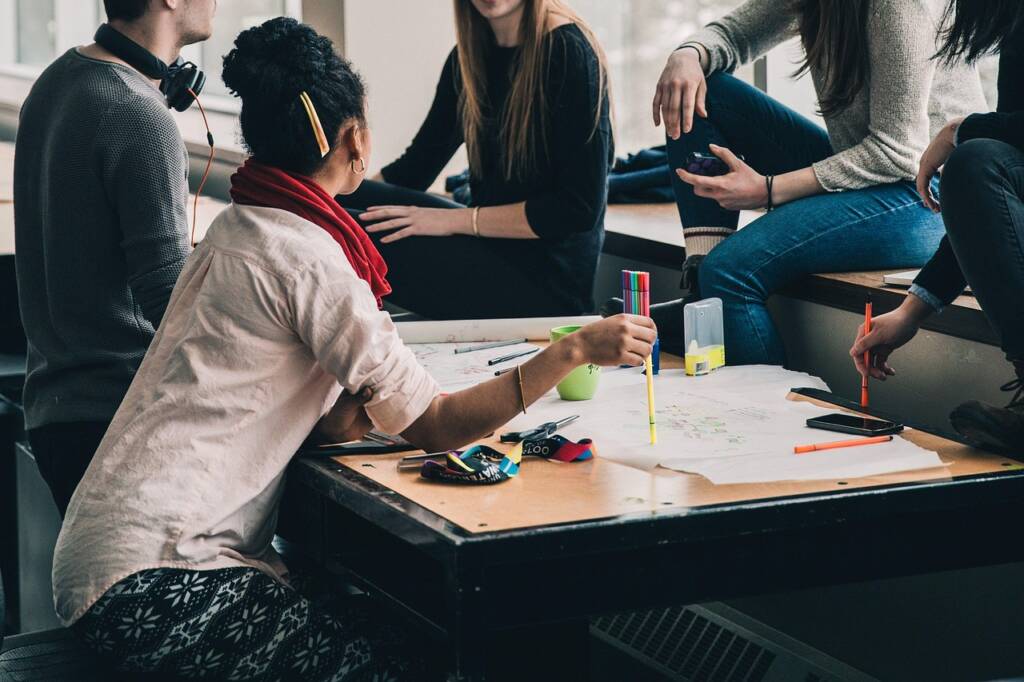
Not rows of desks. But studios, labs, gardens, workshops, digital worlds. Students work on real projects:
- Designing a water-saving city block.
- Building a community garden.
- Creating a podcast explaining climate change.
- Training an AI model to detect misinformation.
Knowledge appears naturally — because it is needed.
The Return of the Human
Ironically, as machines grow smarter, human traits grow more valuable. Caregivers. Therapists. Teachers. Craftspeople. Storytellers. Community builders. Jobs built on empathy, presence, and meaning resist automation. The future belongs to those who remain unmistakably human.
The Real Goal of Education
Not to produce workers. Not to transmit facts. But to grow minds that can:
- Learn again and again.
- Stay balanced in chaos.
- Collaborate with intelligent machines.
- And reinvent themselves without losing their humanity.
Education in the 21st century is not preparation for life. It is life — practiced early. We once built schools to fit factories. Now we must build schools to fit a universe in motion.
And the students? They are not empty containers to fill. They are travelers — learning how to navigate an ocean that never stops changing.
To not miss out on fresh articles, useful tips, and exclusive materials, I suggest subscribing to our newsletter:
Thank you for your attention, Lumin Hopper